

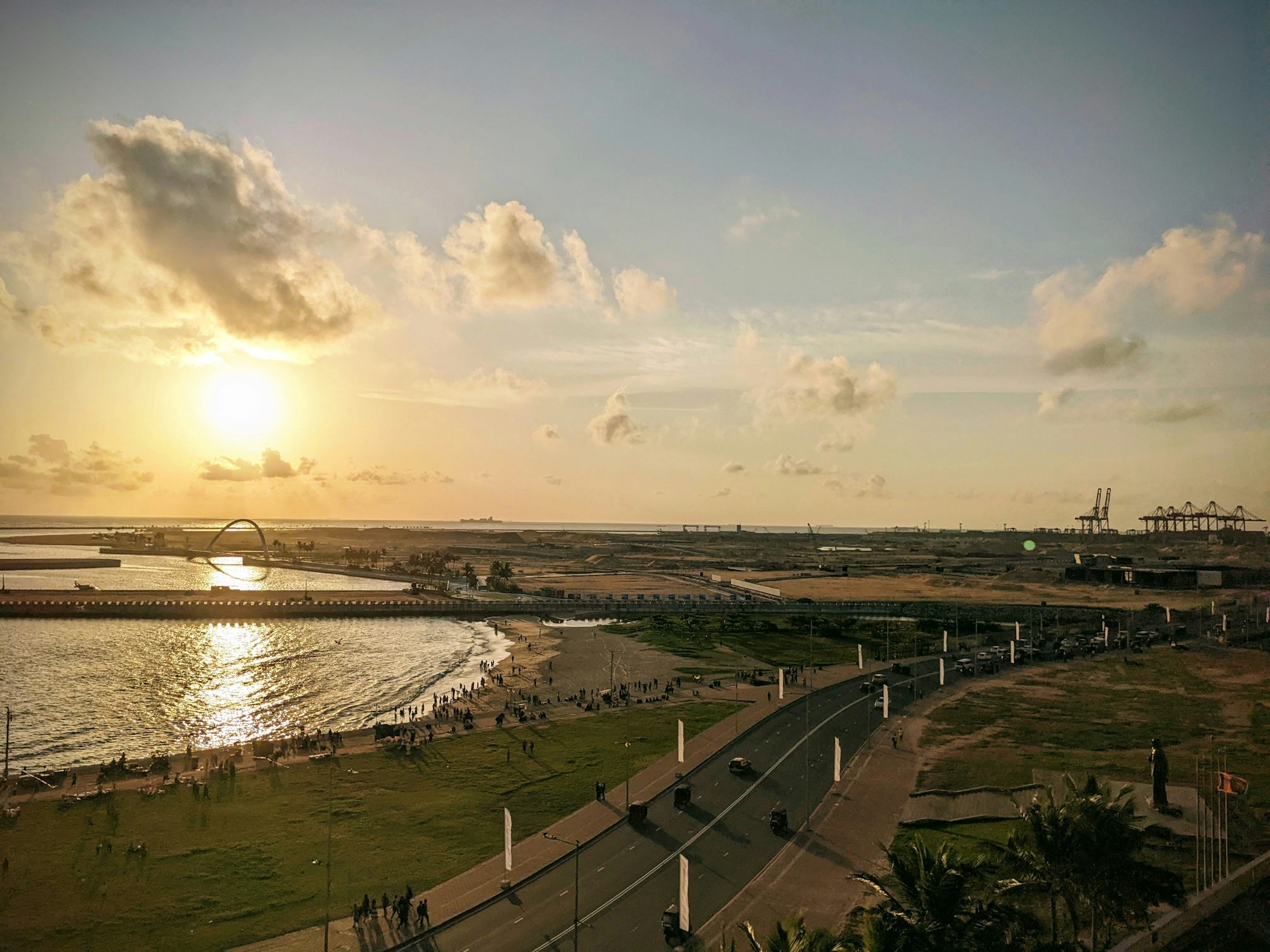
The best time to visit Colombo is from December to March, and January and February are the safest bets. That is the driest stretch of the year on Sri Lanka’s west coast, with only around five rainy days a month on long-term averages. The months to avoid if rain matters to you are May, October, and November, which are the wettest. July and August are a reasonable second choice: rain does not stop, but it usually eases between the two wet peaks.
Temperature barely changes. Colombo is hot and humid all year, with daytime highs of roughly 30 to 32°C every month, so you are really choosing between more rain and less. Your choice gets harder if Colombo is only one stop on a wider Sri Lanka trip, because Kandy, Galle, and the east coast each follow a slightly different pattern. This guide covers all of that so you can pick dates once and book with confidence.
When is the best time to visit Colombo?
| Travel window | Months | What to expect |
|---|---|---|
| Best overall | January to March | Driest months, sunniest skies, good sea-front evenings. Peak season, so hotels and flights fill earlier. |
| Good, but busy | December | Rain tapers off through the month. Christmas and New Year push up demand. |
| Reasonable second choice | July and August | Southwest monsoon season, but Colombo usually sees a lull: showers on roughly a third of days rather than half. |
| Mixed | April, June, September | Rain builds or lingers. Fine for a city stopover if you plan indoor backups. |
| Wettest | May, October, November | Heavy downpours and the highest flood risk in low-lying parts of the city. |
Colombo weather by month
The figures below are long-term averages for Colombo (NOAA climate normals, 1991 to 2020). Treat them as a guide to the pattern, not a forecast for your dates. Rainy days are days with at least about 1 mm of rain.
| Month | Avg high / low | Avg rainfall | Rainy days | Verdict |
|---|---|---|---|---|
| January | 31°C / 23°C | ~80 mm | ~5 | Excellent |
| February | 32°C / 24°C | ~77 mm | ~5 | Excellent |
| March | 32°C / 25°C | ~103 mm | ~8 | Very good, getting hotter |
| April | 32°C / 25°C | ~249 mm | ~13 | Mixed, afternoon storms |
| May | 32°C / 26°C | ~314 mm | ~17 | Wet |
| June | 31°C / 26°C | ~197 mm | ~15 | Mixed |
| July | 30°C / 26°C | ~123 mm | ~10 | Fair |
| August | 30°C / 26°C | ~116 mm | ~10 | Fair |
| September | 30°C / 25°C | ~264 mm | ~15 | Mixed to wet |
| October | 30°C / 25°C | ~359 mm | ~19 | Wettest month |
| November | 31°C / 24°C | ~346 mm | ~16 | Wet |
| December | 31°C / 24°C | ~171 mm | ~9 | Good, improving |
Two things stand out. First, rain more than quadruples between February and October, while the temperature hardly moves. Second, Colombo has two wet peaks, not one: May and October to November. That double peak is why a simple “monsoon season” label can mislead you.
How do Sri Lanka’s monsoons affect Colombo?
Sri Lanka’s Department of Meteorology divides the year into four seasons. Colombo is on the west coast, so it is mainly hit by the southwest monsoon and the inter-monsoon storms either side of it.
| Season | Months | Colombo and the west/south coast | East coast and north |
|---|---|---|---|
| Northeast monsoon | December to February | Mostly dry and sunny | Wet, especially early in the season |
| First inter-monsoon | March to April | Hot, with afternoon thunderstorms building in April | Drying out |
| Southwest monsoon | May to September | Wet, heaviest in May; often lighter in July and August | Mostly dry |
| Second inter-monsoon | October to November | Wettest period of the year, with heavy storms | Rain arriving |
The late-year storms can be serious. Depressions and occasional cyclones from the Bay of Bengal can bring severe flooding to parts of Sri Lanka, including low-lying areas of Colombo, and disrupt road, rail, and air travel. Major events are not annual, but they are why October to November is the riskiest window for a tight itinerary.
What is the best time to visit Colombo and Kandy?
January to March works best for both. Kandy sits inland at around 500 m, so it is a little cooler than Colombo, and its driest stretch runs from about January to March. Its wettest months are October to December, so a December trip that is fine in Colombo can still be damp in Kandy.
July and August are a workable second option for this pairing. Both cities get moderate rain rather than their heaviest. It is also when Kandy holds the Esala Perahera, Sri Lanka’s best-known Buddhist procession, which brings huge crowds and much higher hotel prices for those nights. If you want to see it, book Kandy accommodation well ahead. If you do not, avoid those dates.
What is the best time to visit Colombo and Galle?
Galle is on the same southwest coast as Colombo, so the pattern is almost identical: driest in January and February, good through March, wettest in May and October. December to March is the best window for a Colombo and Galle trip, and it is also the main beach season on the south coast.
During the southwest monsoon, from about May to September, seas on the west and south coasts are usually rougher. Galle Fort is still worth seeing, but beach days are less reliable. If beaches are the reason for the trip and you can only travel in the middle of the year, look at the east coast instead.
What if you are combining Colombo with the east coast?
The east coast runs on the opposite schedule. Trincomalee, for example, is driest from about April to September and wettest in November and December. That makes July and August the natural window for a split trip: a day or two in Colombo during its mid-year lull, then the east coast at its best. If you travel in January or February, the reverse applies: Colombo and the south coast are at their best while the east coast is still wet.
What is Colombo like in August, September, October and December?
August
One of the better mid-year months. Expect around 10 rainy days on average, often short bursts rather than all-day rain, and a steady sea breeze. It is a good month for a city stay paired with the east coast or Kandy.
September
Rain starts building again toward the second inter-monsoon. Plan outdoor sightseeing for the morning and keep a flexible afternoon.
October
Usually the wettest month of the year in Colombo. It is fine for a short stopover or a business trip, but it is the hardest month to recommend for a holiday built around walking and the seafront.
December
Conditions improve through the month as the northeast monsoon takes over. Early December can still be showery, and late December brings holiday crowds. Book flights and hotels early if you are traveling over Christmas or New Year.
When is Colombo busiest and most expensive?
Demand follows the dry weather. December to March is peak season for international visitors, and Christmas, New Year, and European winter holidays tend to push hotel rates and fares higher. July and August also see a bump from summer holidays in Europe and around the Kandy Esala Perahera.
April and May are shoulder months with a local twist. Sinhala and Tamil New Year falls on 13 and 14 April, when many Sri Lankans travel home and some shops and businesses close for a few days. Vesak, the full moon festival usually in May, fills Colombo with lanterns and decorations and is a memorable time to be in the city.
If you are flexible, the shoulder weeks at either end of peak season, early December and late March into early April, often give the best balance of weather and availability.
Which festivals are worth timing a Colombo trip around?
| Event | Usually held | Where |
|---|---|---|
| Duruthu Perahera | January, around the full moon | Kelaniya Raja Maha Vihara, a short drive northeast of central Colombo |
| Navam Perahera | February, around the full moon (occasionally late January) | Gangaramaya Temple, Colombo |
| Sinhala and Tamil New Year | 13 to 14 April | Nationwide |
| Vesak | May full moon, usually | Nationwide, with lantern displays across Colombo |
| Esala Perahera | July or August | Temple of the Tooth, Kandy |
Buddhist festivals follow the lunar calendar, so dates shift each year. Check the official dates before you book. Note that every full moon day (Poya) is a public holiday in Sri Lanka. Alcohol sales are generally restricted on Poya days, and some venues close, so check the calendar if a night out is part of your plan.
Is it worth visiting Colombo during the monsoon?
Yes, if Colombo is a short stop rather than a beach holiday. Rain in the city usually comes in heavy bursts, often in the afternoon or evening, with dry spells in between. Hotels, malls, museums, and restaurants keep the city usable, and outside peak season you may find better hotel availability.
A few habits make a wet-season stay easier:
- Do outdoor sightseeing, such as Galle Face Green or the Fort and Pettah area, in the morning.
- Allow extra time for airport transfers, as heavy rain slows Colombo traffic.
- Avoid tight same-day connections between a domestic train or road trip and an international flight.
- Check the Sri Lanka Department of Meteorology for current warnings in the days before you travel.
Compare Colombo flights across your travel window
Once you have picked a season, check a few nearby dates rather than one fixed weekend. Peak-season fares can shift by day. Search flights to Colombo on Farelyt to compare options from your departure city.
How to plan the rest of your Colombo trip around the season
The season affects where you stay. In the dry months, a waterfront base near Galle Face makes the most of sunset walks. In the wetter months, a central hotel close to restaurants and indoor options saves time in traffic. Our guide to where to stay in Colombo compares the main areas, and best things to do in Colombo on a short trip helps you build the days.
Dry-season evenings are when Colombo is at its best, so if seafront walks and street food are part of the plan, read Colombo at night as well. If you are flying from India, where Indian school holidays and long weekends add their own pressure on fares, see the best time to book flights from India to Colombo.
Final takeaway
For the best weather, visit Colombo between January and March. December is good if you book early. July and August are the best mid-year option, especially if you are pairing Colombo with Kandy or the east coast. Avoid May and October to November if rain would spoil the trip. Whatever you choose, plan the wider route first, then lock flights and hotels before peak demand sets the price.