

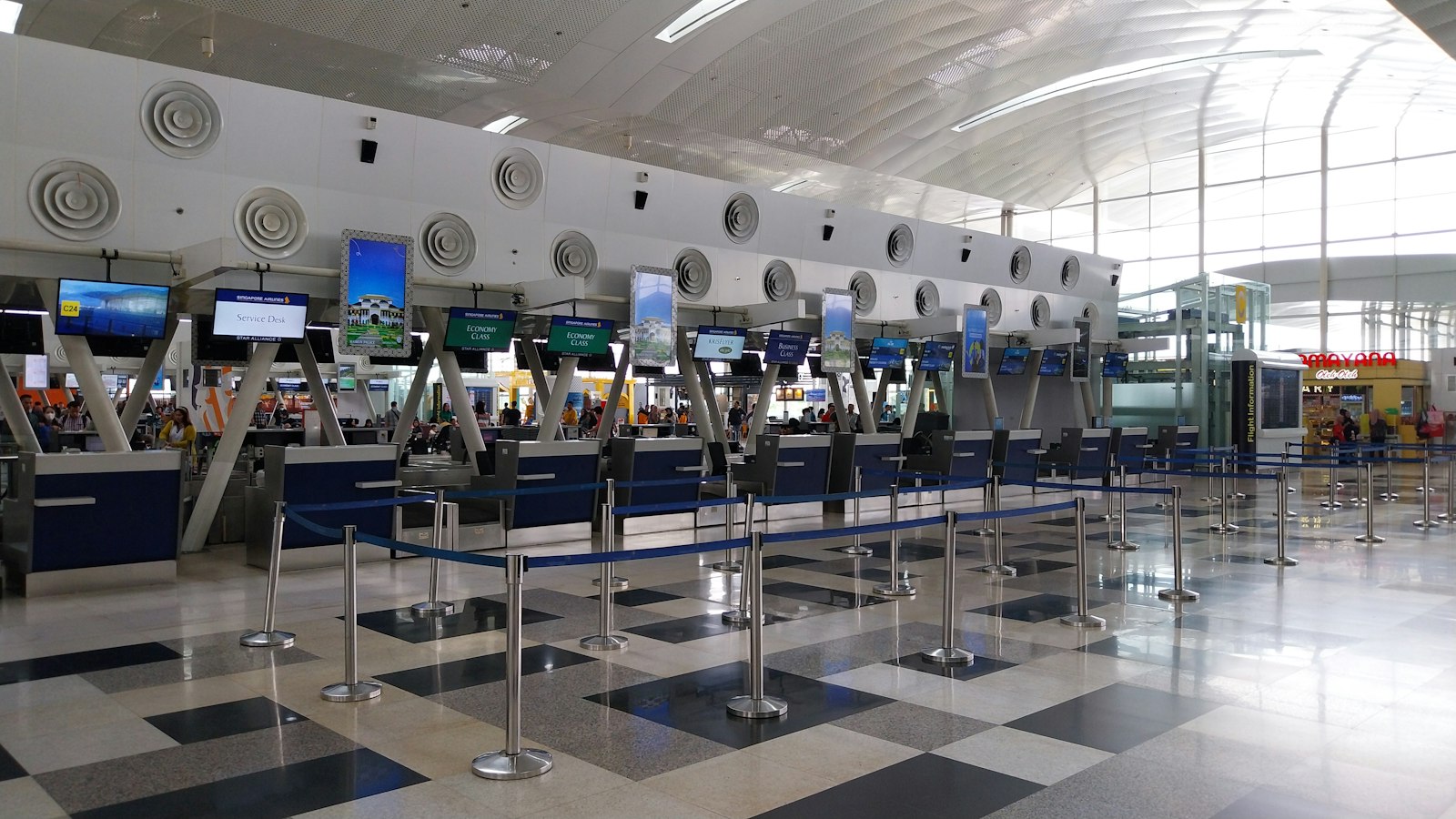
A self-transfer flight is an itinerary built from two or more separate tickets, so you, not the airline, are responsible for making the connection. That usually means collecting your bags, checking in again, and sometimes passing through immigration at the connecting airport. If your first flight is late and you miss the second, the second airline is generally not obliged to wait, rebook, or refund you.
Self-transfers can be worth it when the saving is large, the layover is long (several hours or an overnight), you travel with carry-on only or have time to recheck bags, you can legally enter the connecting country, and missing the onward flight would be annoying rather than disastrous. They are a poor choice for tight connections, trips with a fixed deadline, or routes where a missed flight means buying an expensive last-minute replacement.
What does self-transfer mean on a flight booking?
When you book a normal connecting flight, for example London to Bangkok via Doha on one airline or partner airlines, both flights sit on one ticket under one booking reference. The airline has sold you the whole journey, so it is responsible for getting you to the final destination if the first flight runs late.
A self-transfer, also shown as “separate tickets” or “self-connect” on some search sites, joins flights that were never sold together. They may be on two airlines (often including a low-cost carrier) or even the same airline on two bookings. Search engines and online travel agencies combine them because the total can be cheaper, or because no single airline sells that routing.
Google’s own Flights help page explains that separate or self-transfer tickets may require you to claim and recheck baggage, that changes can carry a fee on each ticket, and that if the first flight is delayed you might miss the second one (Google Flights Help).
Self-transfer vs airline transfer: what changes?
The difference is who carries the risk between the two flights.
| Factor | Airline transfer (one ticket) | Self-transfer (separate tickets) |
|---|---|---|
| Missed connection caused by a delay | Generally the airline’s responsibility to rebook you | Generally your problem; the second airline can treat you as a no-show |
| Checked bags | Normally tagged through to the final destination | Usually collected and checked in again at the connecting airport |
| Check-in | Once, at the start of the trip | Again for the second flight, with its own check-in deadline |
| Passport control at the connecting airport | Often avoided at hubs that allow airside transfer | Often required if you have to collect bags or check in landside |
| EU delay compensation for a missed connection | Can apply when flights are on a single reservation | Each ticket is judged on its own |
| Changes and cancellations | One set of fare rules | Separate rules and fees on each ticket |
| Sensible layover | About 2 to 3 hours for most international connections | At least 4 to 6 hours, or an overnight |
The layover ranges come from our guide to how long a layover should be, which breaks connection time down by connection type. On the compensation point, the EU’s official Your Europe guidance says a missed connection is covered when the flights were booked as part of a single reservation (Your Europe: air passenger rights). Rules elsewhere differ, so do not assume a separate-ticket itinerary carries the same protection.
Are self-transfer flights worth it?
The honest answer is: only when the saving pays for the risk. A useful test is to ask what a missed connection would cost you, then compare that with what the self-transfer saves.
| Your situation | Self-transfer verdict | Why |
|---|---|---|
| Large saving, layover of 5+ hours or overnight, carry-on only | Often worth it | Plenty of buffer, no bag recheck, and a delay rarely breaks the chain |
| Large saving, checked bags, layover of 4 to 6 hours | Can work | Allow time for baggage reclaim, a second check-in, and security |
| Small saving, any layover | Usually not worth it | One missed flight can wipe out the saving many times over |
| Layover under about 3 hours | Avoid | An ordinary delay can make you miss check-in for the second flight |
| Onward flight is the last of the day | Avoid, or add an overnight | A miss means a night at the airport plus a new ticket |
| Fixed deadline (wedding, cruise, exam, work start) | Avoid | Arriving a day late can cost far more than the fare difference |
| You would need a visa you do not have for the connecting country | Avoid | You may not be allowed to collect bags or check in again |
| Flexible plans, frequent onward flights on that route | Often worth it | Replacement flights are easier to find if something goes wrong |
Measure “large saving” against the replacement cost: a same-day or next-day ticket on the second leg, plus a hotel. If the saving does not comfortably cover that, the one-ticket option is better value despite its higher headline fare.
Do you need a visa for a self-transfer?
This is the question many travelers miss. On a one-ticket connection at many hubs you stay airside, in the international transit area, and never formally enter the country. On a self-transfer, you often have to leave that area to collect bags and check in again, which means passing immigration. If your passport needs a visa for that country, you need it for the self-transfer too.
- United Kingdom: The UK government says a Direct Airside Transit visa is for travelers changing flights without going through UK border control, while a Visitor in Transit visa is for those who will go through border control and leave within 48 hours (GOV.UK: transit visas). A self-transfer at a UK airport can push you into the second category if you need one at all.
- Schengen Area: The European Commission says an airport transit visa lets you connect through the international transit area of a Schengen airport but does not allow you to leave it (European Commission: applying for a Schengen visa). If a self-transfer means going landside, an airport transit visa is not enough.
- United States: US CBP says Visa Waiver Program travelers need an ESTA or a visa even to transit the United States (CBP: VWP and ESTA FAQ).
Rules depend on your nationality and change, so check the connecting country’s official guidance before you book. If entering the country is not possible for you, choose a one-ticket connection where you can stay airside, and confirm that the specific hub allows it.
What happens to your checked bags on a self-transfer?
Assume you will collect your bags at the connecting airport and check them in again. Each airline only handles bags for its own ticket, and low-cost carriers in particular generally do not transfer bags to other airlines. Some full-service airlines may be able to check bags through to a separate onward ticket if the two airlines have a baggage agreement, but this is discretionary and varies by airline and airport, so treat it as a bonus, not a plan.
Bags also change the price comparison. Each ticket has its own baggage allowance, and a cheap self-transfer that pairs a long-haul fare with a low-cost add-on can need a paid bag on the second flight. Price the whole journey with your real luggage before comparing it against a one-ticket fare. Overlooking those fees is one of the flight booking mistakes that cost travelers more.
Carry-on only is the easiest way to make a self-transfer work. If you already hold the boarding pass for the second flight and can stay airside, some airports let you go straight to the next gate, but whether that is possible depends on the airport layout, transfer security, and whether your passport and the airline allow it. Check before you fly.
What happens if you miss the second flight?
On separate tickets, the airline running your second flight is generally entitled to treat you as a no-show if you do not turn up for check-in or boarding. Expect three consequences:
- You may need a new ticket. Some airlines let you pay a change fee or fare difference instead; others simply keep the fare.
- Later flights on that ticket can be cancelled. Many airlines’ conditions of carriage say a ticket is no longer valid if its flights are not used in the order booked. If your missed second flight was the outbound of a round trip, the return on that ticket can be at risk too. If you know you will miss a flight, call the airline before it departs. Our guide to what happens if you miss your flight covers the next steps.
- Your first airline is unlikely to help. It sold you a ticket that ended at the connecting airport, and it got you there.
Some online travel agencies sell their own self-transfer protection on itineraries they put together, promising an alternative flight or a refund if a delay breaks the connection. These products are run by the booking site, not the airlines, and their terms differ. Read what they cover (minimum layover, eligible causes, how you claim) before relying on one. Travel insurance may also cover missed connections; check the policy wording, because cover for separate tickets varies.
How to make a self-transfer safer
- Leave a real buffer. At least 4 to 6 hours, and an overnight for long-haul arrivals or the last flight of the day.
- Protect the expensive part. Keep the long-haul flights on one ticket and use a separate ticket only for a short, cheap add-on with frequent departures. Missing a regional flight is far cheaper than missing an intercontinental one.
- Stay at one airport. Self-transfers that switch airports in the same city (for example between two London or two Bangkok airports) add ground transport time and risk.
- Check terminals. A terminal change can add a long walk, a train ride, or a second security check.
- Check in online for the second flight as soon as it opens, and note its bag drop and check-in deadlines.
- Prefer flexible fares on the second ticket when the price difference is small, so a delay costs a change fee rather than a full new fare.
On long-haul trips, the connection is part of the airline decision, not a separate detail. Our guide to choosing the best airline for long-haul flights covers how layovers, baggage, and arrival times change which option is actually best.
How do you spot a self-transfer in search results?
Search sites usually label these itineraries, but the wording varies: “self-transfer”, “separate tickets”, “self-connect”, or a note that the trip is made up of several bookings. Before paying, open the itinerary details and check:
- whether there is one booking reference or several
- whether bags are checked through or must be collected
- whether the two flights use the same airport and terminal
- how long the layover is, measured against your arrival time
- whether the price on the airline or agency site matches the search result for every ticket
A self-transfer that combines a long-haul flight with a short low-cost hop is common on Europe trips, where travelers land at a big gateway and continue on a separate budget flight. Our flights to Europe guide explains how gateway choice and onward travel affect the total cost.
Compare one-ticket and self-transfer options
Search your route on Farelyt and compare the cheapest result against the best one-ticket connection. Look at layover length, connecting airport, baggage, and total journey time, then decide whether the saving is worth carrying the connection risk yourself.
Final takeaway
A self-transfer flight is not a scam or a trick. It is a trade: you get a lower fare or a routing no single airline sells, and in exchange you take on the risk of the connection. Book one when the saving is meaningful, the layover is long, your luggage and visa situation allow a landside transfer, and a missed onward flight would be cheap to fix. If any of those is missing, pay a little more for a one-ticket connection and let the airline carry the risk.