

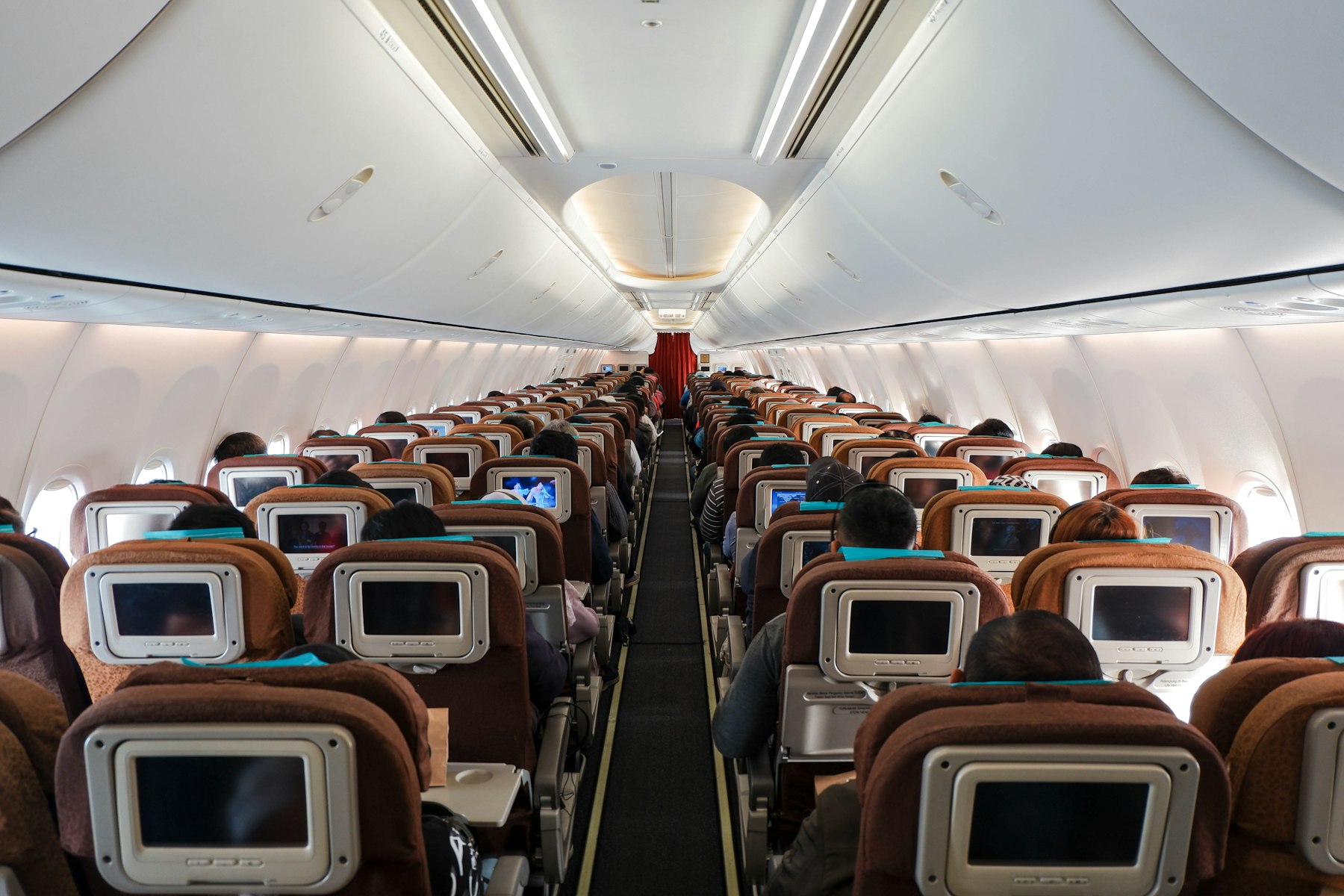
The best seat on a long-haul flight depends on what you want from the trip. If you want to sleep, pick a window seat away from the toilets and galleys. If you get up often or have long legs, pick an aisle seat, or an exit row if you are eligible and don’t mind a seat that may not recline. If you have a tight connection, sit as far forward as you can. The seat that suits nobody is the last row near the toilets. Below is how to match a seat to your goal, which seats to avoid, and when paying for seat selection is worth it.
What is the best seat on a long-haul flight?
No single seat number is best on every plane, because cabin layouts vary by aircraft and airline. The useful question is which seat fits your main goal for this flight. Start here:
| Your main goal | Best seat to target | Main trade-off |
|---|---|---|
| Sleep through an overnight flight | Window seat, middle of a cabin section | You have to climb past neighbors to get out |
| Move around, stretch, use the toilet freely | Aisle seat | Bumped by carts and people; neighbors wake you |
| Maximum legroom | Exit row (if eligible) or a paid extra-legroom row | Often colder, may not recline, no bag at your feet for take-off and landing |
| Traveling with a baby | Bulkhead row with a bassinet position | Fixed armrests, no under-seat storage in front of you |
| Tight connection or long immigration queue | Aisle seat near the front of economy | Front rows sell out or cost more first |
| Nervous flyer | Seat over or just ahead of the wing | The wing blocks much of the view |
| Chance of an empty seat next to you | A row towards the back on a flight that isn’t full | Off the plane later; closer to the rear toilets |
Most people can only have one or two of these, so decide what matters most on this particular flight. A 13-hour overnight flight to London rewards sleep. A daytime flight that lands with a 90-minute connection rewards a forward aisle seat.
Window or aisle seat on a long flight?
This is the choice most travelers actually face, and on long flights it matters more than on a short hop.
Choose a window seat if you plan to sleep, you can go several hours without getting up, and you like controlling the window shade. You have a wall to lean against, and nobody climbs over you at 3 a.m.
Choose an aisle seat if you drink a lot of water, you want to walk around to stay comfortable, you are tall, or you need to reach the overhead bin easily. You can get up whenever you like, but expect elbows from the trolley, a few knocks from passing passengers, and to be woken whenever the people inside your row want to get out.
The layout changes the maths. Wide-body economy cabins commonly use 3-3-3, 3-4-3, or 2-4-2 seating, depending on the aircraft and airline. In a 2-4-2 layout, found on many Airbus A330 cabins, a window seat has only one neighbor, so getting out is easy and the window becomes the clear pick. In a 3-4-3 layout, the window passenger may have to disturb two people every time, which pushes restless travelers towards the aisle. The aisle seats of the centre block are a good compromise: aisle access, and only the person beside you to disturb.
Are exit row seats worth it on long-haul flights?
For many adults, yes: an exit row is usually the most legroom you can get in economy, and on a long flight that difference is easy to feel. Before you pay for one, know the catches.
- Eligibility rules apply. Passengers in exit rows must be willing and able to help in an evacuation. In the United States, FAA rule 14 CFR 121.585 bars anyone under 15, and anyone who can’t read and understand the safety instructions or reach and open the exit, from these seats. Other countries and airlines have similar rules, and crew can move you if you don’t qualify.
- Recline can be limited. Some exit-row seats don’t recline. On many aircraft, the row directly in front of an exit also has limited or no recline.
- No bag at your feet. You usually can’t keep a bag on the floor during take-off and landing, so everything goes in the overhead bin.
- Fixed armrests and tray tables. Tray tables and screens are often stored in the armrest, which makes the seat a little narrower and stops you lifting the armrest.
- Drafts and traffic. Exit areas can feel colder and often become a place where other passengers stand and stretch.
Many airlines now sell exit rows as paid extra-legroom seats. If you are tall or struggle with cramped seats, they are usually one of the better-value upgrades on a long flight. If you mainly want to sleep and like to recline, a normal window seat may serve you better.
Is a bulkhead seat good for long flights?
Bulkhead seats are in the first row of a cabin section, facing a wall or partition. Nobody can recline into you, and you won’t have to climb over anyone’s reclined seat. On many long-haul aircraft, the bulkhead is also where airlines attach infant bassinets, which makes these rows the default choice for parents with babies. Bassinet rules, such as weight and age limits, vary by airline, so check yours and request one early.
The downsides: legroom isn’t always better than a normal row, there is no seat in front of you to store a bag under, armrests are fixed, and you are likely to be seated near babies. If you want quiet, bulkhead rows are usually not the place.
Front or back of the plane: which is better?
Sitting near the front of economy gets you off the plane sooner. On a long-haul arrival that can mean a much shorter wait at immigration, which matters if you have a short onward connection. If your itinerary is tight, read our guide on how long a layover should be and treat a forward seat as part of the plan. Meal service also often starts from the front, so you are less likely to miss your first meal choice, although some airlines serve from both ends of the cabin.
Sitting towards the back has a different advantage. Seats there tend to be chosen last, so on a flight that isn’t full you have a better chance of an empty seat beside you. The trade-off is a slower exit and more time near the rear toilets and galley.
The area over the wing is generally considered the smoothest part of the cabin, so nervous flyers often prefer it. Many passengers say they feel turbulence less there.
Which seats should you avoid on a long-haul flight?
- The last row. It often has limited recline because of the wall behind it, and it sits next to toilets and the galley, which means noise, light, queues, and smells all night.
- Seats beside toilets or galleys. The same problems as the last row, even mid-cabin. Check the seat map for toilet and galley symbols.
- The row in front of an exit row. Recline is often limited, and you get none of the exit row’s legroom.
- Window seats without a window. On some aircraft, certain window seats line up with a wall panel instead of a window. If you want the view, check a seat map before you choose.
- Seats with a box under the seat in front. Some seats have entertainment equipment boxes underneath them that cut foot space. Seat maps and traveller reviews sometimes flag these.
- Middle seats in a 3-4-3 centre block. On a long flight, this is usually the least comfortable seat in economy.
Best seats for couples and families
On a 2-4-2 aircraft, couples can book a window-and-aisle pair at the side of the cabin and have the row to themselves. On a 3-3-3 layout, some couples book the window and aisle of the same row and leave the middle empty. If nobody takes it, you have more space. If someone does, they will usually swap. This is a gamble, though: on a full flight, the middle seat is very likely to be sold.
Families with children usually do best in a centre block, where a group of three or four can sit together and only one adult needs an aisle seat. If you are flying with an infant, ask the airline about bassinet rows when you book rather than at the airport.
Is it worth paying for seat selection on a long-haul flight?
On many airlines, the cheapest economy fares don’t include free advance seat selection. You can pay to choose a seat now, or wait until check-in, when a seat is assigned or you can choose from what’s left for free. Whether paying is worth it depends on your situation:
| Situation | Pay for a seat? | Why |
|---|---|---|
| Solo, flexible, flight not busy | Usually no | Free selection at check-in often still leaves decent window or aisle seats |
| Overnight flight and you need sleep | Often yes | A paid window seat beats a random middle seat on a 10-hour-plus flight |
| Traveling as a couple or family | Usually yes | Free assignment can split groups up on busy flights |
| Tall, or you need easy aisle access | Often yes | Exit rows and aisle seats go first |
| Peak season or holiday dates | Leaning yes | Full flights leave little choice at check-in |
Seat fees can add a real amount to the fare, especially for a family on a return trip. Before choosing the cheapest ticket, compare it with a fare type that includes seat selection and baggage. Our guide to choosing the best airline for long-haul flights explains how to compare the full price, and these common booking mistakes show where else add-ons can catch you out.
How to check your seat before you pay
- Find the aircraft type. Your booking or the flight details in the search results usually name the aircraft. The same airline can fly very different cabins on different routes.
- Open the airline’s seat map. Look for toilets, galleys, exit doors, bulkheads, and seats marked as having limited recline.
- Count the layout. Note whether economy is 3-3-3, 3-4-3, or 2-4-2. That decides how much the window-versus-aisle choice matters.
- Check when check-in opens. Online check-in often opens 24 to 48 hours before departure, depending on the airline. If you aren’t paying, check in as soon as it opens for the best free choice.
- Recheck after any schedule change. If the airline swaps the aircraft, your seat can be moved. Look at your booking again after any change email.
If your trip involves two separate tickets, seats on each flight are handled separately. Our self-transfer flights guide covers what else changes on separate tickets.
Compare long-haul fares before you pick a seat
Search your route and compare the total price, aircraft, departure time, and what each fare includes. A slightly higher fare that includes seat selection and baggage can cost less in the end than the cheapest ticket plus add-ons.
Final takeaway
There is no universal best seat, only the best seat for your goal on a given flight. Pick a window seat to sleep, an aisle seat to move, an exit row for legroom if you qualify and can live without recline, a bulkhead for a baby bassinet, and a forward seat when your connection is tight. Avoid the last row, seats beside toilets and galleys, and the row in front of an exit. Check the aircraft and seat map before you pay, and only pay for a seat when sleep, legroom, or sitting together is worth the fee.